


I had a classic parenting moment this weekend. My ten-year-old came to me with a problem – mean girls – and I spent about half an hour with her explaining the phenomenon. We covered everything from the art of recognizing knuckleheads in the wild to rooting herself in the knowledge of how God sees her. I was firm, I was eloquent; we ended the session laughing and I was excited for the new strength I was sure she would carry with her for the rest of her life. Problem solved.
Later, I set myself up for a writing session…and I completely froze. The reason: a bad opinion some one had expressed about me a couple of days earlier. I became fixated on the insult and utterly failed to produce so much as a single sentence, all because I knew that somewhere out there, at least one person would call B.S. on anything I had to say. Defeated, I found some other diversions to pass my time staring at the screen, then closed down for the night. Negativity wins.

It is disappointingly easier for me to talk than to walk. Convicted on this point, I decided to cope in my typically nerdy fashion: research! Here’s what I learned about negative feedback, and how I am planning to beat it next time.
1. The most common image I associate with the word feedback is the horrible, spine-decalcifying squeal that sound systems emit by accident in a concert or speech setting. This type of feedback occurs when sound waves from speakers pass into a microphone and are re-amplified and cycled through the speakers again. For me, this image is a reminder that allowing my thoughts to loop and process around the opinions and words of others only creates increasing dissonance.
The solution is so simple: Move away from the source! Put some distance and intelligent boundaries between myself and destructive voices around me. Of course, simple is not the same as easy, and it takes practice. Until I get good at it, I can always try the time-honored tradition modeled for me by the ladies of Friends: get the words out of my head and onto paper…and then burn them.

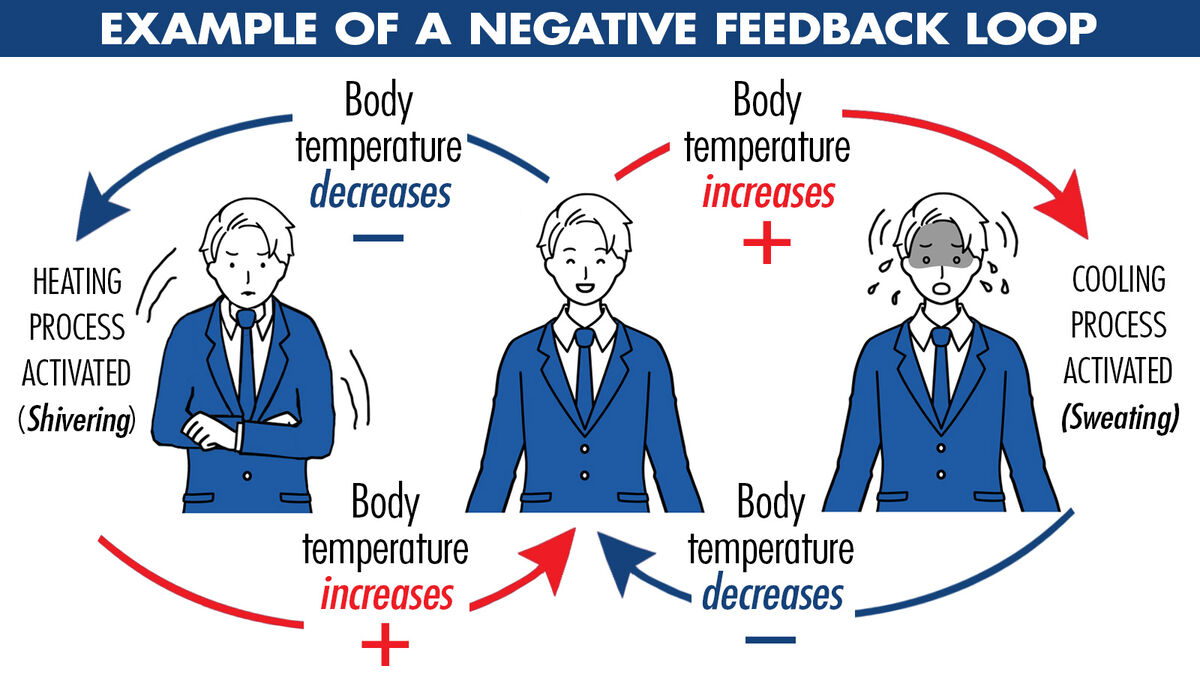
2. In medical terms, negative feedback is one of the control systems used by an organism to regulate internal functions regardless of external conditions or circumstances. In this system, the organism will automatically make changes in order to reduce something it is producing. For example, if my body is producing too much heat, it knows to excrete sweat to try and reduce the temperature.
Similarly, I can develop a set of pre-determined responses to negativity. Good examples include reading the Bible, calling a friend, and cleaning house to an angry music playlist (personal faves include “Here Comes Revenge,” “So What,” “My Lovin’ (You’re Never Gonna Get It), and almost anything by Linkin Park). If I have tools prepared ahead of time, I’m less likely to lapse into bad habits or succumb to paralysis — no matter what is going on around me.
3. Feedback has become a popular concept in therapy and the workplace, indicating a form of ongoing training that helps counselors and supervisors make healthy, effective contributions. Positive feedback reinforces and acknowledges progress; negative feedback is corrective, helping to redirect misaligned priorities or non-productive strategies.
This reminds me of a former pastor of mine who taught me to view difficult people as “life coaches.” By their very existence, antagonists create boot camp-level real-world experience in practicing the example of Jesus. Loathe as I am to give any credit to them, I know that there is value in this training, for character development if nothing else. I do not, of course, mean to indicate in any way that the life of a believer—or anyone!— is best served as a doormat, because that’s not the model Jesus laid out at all; boundaries and intervention are required, especially in cases of abuse. But can I pray for those who hurt me in everyday situations even as they are jeering, disrespecting, and chewing me out?
Or rather, will I?



Such good advice.
LikeLike