


Fairy tales exist in various forms and iterations throughout every world culture. Some are scary, some are fun, some have a good old-fashioned moral at the end, and some seem to have no ending at all. The exact origins of fairy tales can be difficult to nail down due to the fact that so many evolved from oral traditions. A study from 20151 found evidence of traditional fairy tales in Indo-European language cultures dating back 6000 years or more…and that doesn’t even count older cultures such as in Egypt and the Far East. According to the Aarne-Thompson-Uther Classification of Folk Tales, animal tales, anecdotes, tales of magic, puns, formula tales, and more—basically everything from Aesop’s Fables to dad jokes—have their roots in fairy tales.
So what is it about these stories that keeps them resonating in our hearts and homes generation after generation? I can’t speak for everyone, of course, but once again following the six stages of pilgrimage2, I can spin for you my own tale of finding faith in fairy tales—and vice versa—on Creator’s good road.3
1. The Call: The opening clarion of any spiritual journey; a yearning to find meaning both in and also beyond the ordinary.
Fairy tales have always been a significant part of my upbringing and formation. My first in-theater movie experience was the 1979 re-release of Sleeping Beauty, my favorite part of visiting my great-grandmother’s house every summer was holing up in her cool basement to pore over her storybooks, and my bedroom walls were festooned with a rotation of Disney princess movie posters all the way into my early 20s.
I never viewed these women as damsels being saved by men or as passive recipients of whatever the story threw at them (though some of them certainly were). What I saw and stayed hungry for was one of the few avenues of story available to me in which women were the valued perspective, the main character, and the center of the narrative. I saw colors and stories and music and strength in a realm that cared about me. I collected the dolls, read every fairy tale collection in every library I could, and fell asleep at night to their soundtrack melodies and melodrama. And I’m not the only one.
2. The Separation: Pilgrimage, by its very nature, undoes certainty.
When she was about six years old, I decided to take my own fairy tale-loving oldest daughter to see Disney Princesses on Ice, and I was surprised to find myself having a mild existential crisis in the line. For one thing, the spectacle of sight and sound around us was overwhelming, to say the least. On our right stood a 10-foot tall, aggressively glitterized cardboard cutout of the show’s heroines in full winter regalia, including ice skates, of course. They loomed over us in what was surely meant to be an inspiring enticement of the wonders to come, but the heft of it created a somehow threatening effect as well. “LOOK HOW BEAUTIFUL WE ARE!” they practically screamed. “LOVE US! HAVE FUN! OR ELSE!!!”
On our left swarmed masses of other parents (mostly moms) and youngsters (mostly girls), chattering and darting about as they strained forward to purchase one of the dozens (hundreds? thousands?) of merchandise offerings unique to this particular event: not just plush Snow White dolls, but Disney Princesses on Ice plush Snow White dolls. Not just a slushy in a reusable cup; a Disney Princesses on Ice slushy in a light-up Disney Princesses on Ice souvenir reusable cup. Not just any old diapering toiletries in case you forgot yours at home; Disney Princesses on Ice wipes and cream and hand sanitizers, because only the Disney-est solutions were good enough for your little ones’ bums here.
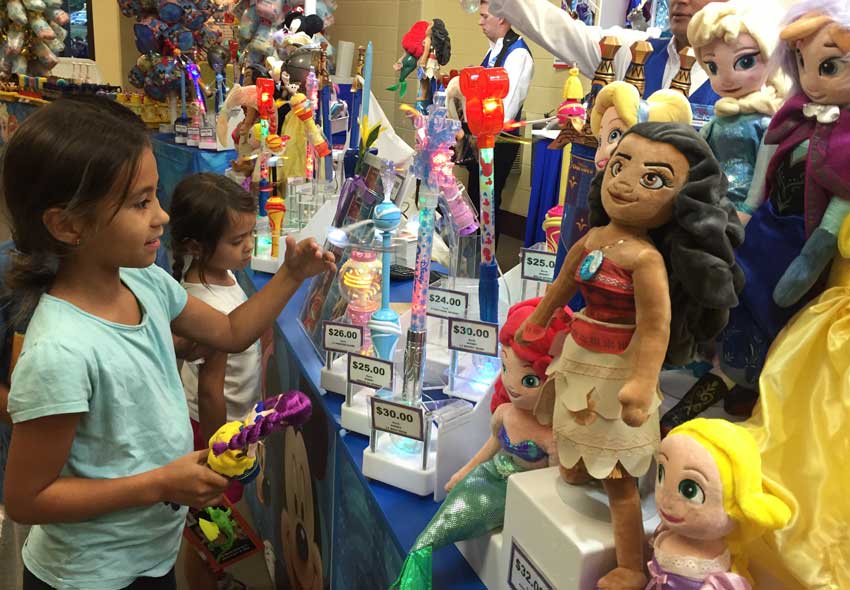
As I strained my neck to see for the hundredth time whether the arena doors had opened yet, I observed the pastel pandemonium around us and struggled with that age-old question parents everywhere ask themselves every day: Am I doing this right? One shoulder angel chided me that my daughter was deprived, since she was one of maybe ten kids in the entire stadium not dressed in full-on favorite princess cosplay and carrying at least three pieces of merch on her person. The other side insisted I had no business being there in the first place because did I want her to turn out as some commercially driven damsel in distress, pining for someone to save her and/or buy her shiny new things-of-the-moment to prove her worth for the rest of her life? Why oh why were so many of us out here early on a Saturday morning caring so much about displaced fantasy characters—including a mermaid, for heaven’s sake—galavanting about on an ice rink?
What was I doing here?
3. The Journey: The backbone of a sacred journey is the pain of the journey itself. The princess stories popularized by Disney and other animation studios stem primarily from the literary works of Charles Perrault (1690s), the Brothers Grimm (1812-1815), and Hans Christian Andersen (1835-1837). Our versions have been cleaned up for modern audiences (and no doubt for the MPAA; the original little mermaid plotted to commit murder, and her feet bled terribly the entire time she was in human form), and yet they have developed a bad reputation in modern times. Google “fairy tales” at any given moment, and not too far down the list of results you’ll find laments on how they:
- demean women and promote misogynistic views of their roles in society
- damage young girls’ perceptions of themselves
- establish unrealistic expectations for boys/men as the handsome prince and rescuer
- manipulate the attitudes and behaviors of children
And when we strip the structure of the average princess story down to its bare bones, we tend to find the following features in common:
- The Princess—a child of royalty, uniquely gifted in some way and often separated from her family, heritage, and/or resources due to negative forces at work around her (let’s not get hung up on gender, though, because this figure is not always female; see Aladdin, Simba, and the best example for our purposes, the Beast).
- The Forces of Evil—at least one heartless and/or tricky antagonist, often the purveyor of a curse, who traps the Princess and seeks to destroy her.
- True Love—usually embodied within a handsome Prince Charming, this is the most powerful magic in the universe and the only force which can rescue the Princess from the Forces of Evil.
When we interpret these elements from a purely earthly perspective (i.e. romantic relationships, gender-specific societal roles, parental representation, etc.) and seek to find their fulfillment within our physical and emotional lives, then they are undeniably problematic.
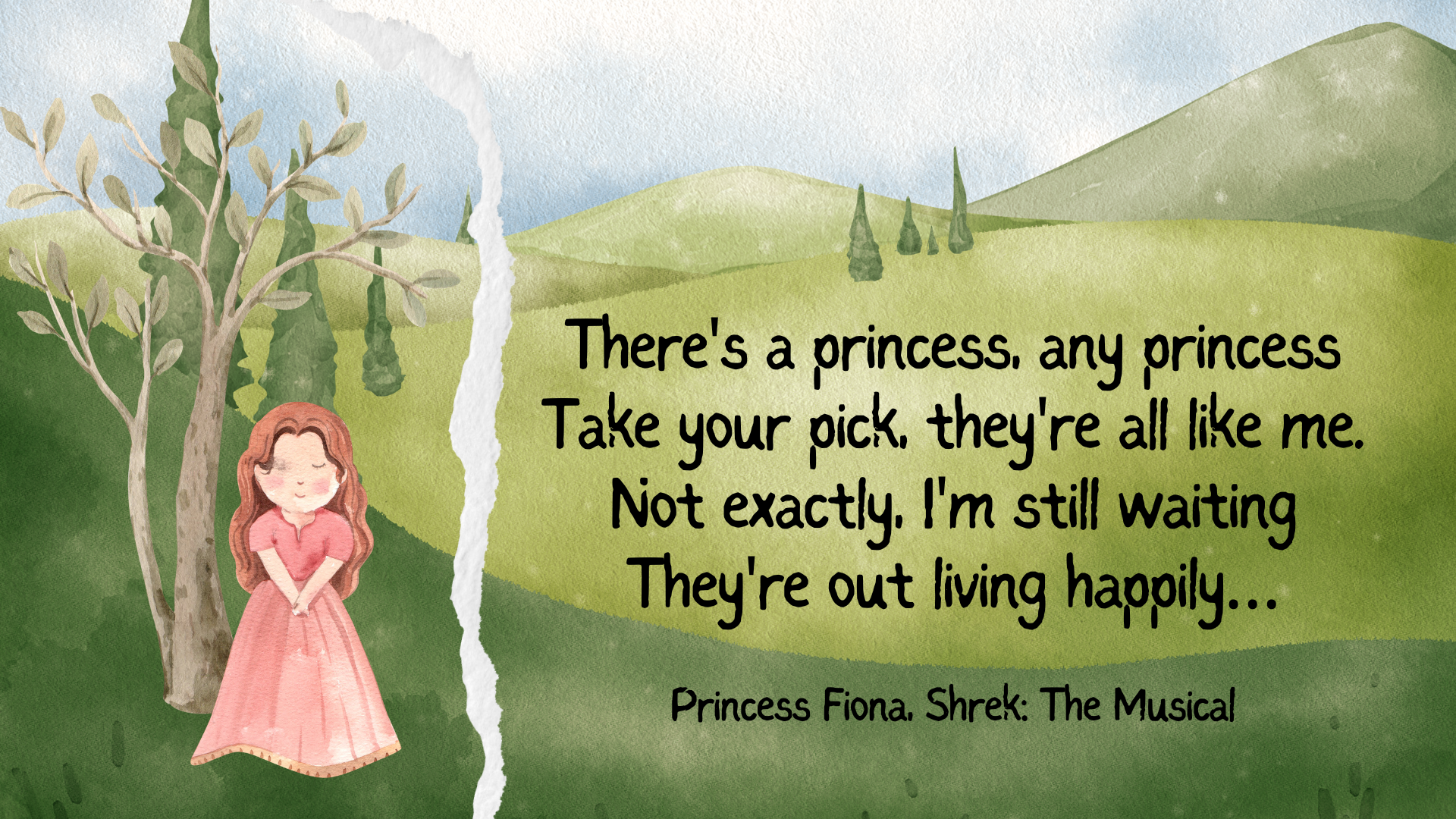
Then again, girls and the women we grow up to be are not stupid. It’s not possible for so many of us to be mindlessly duped into not just enjoying, but actively pursuing and feeling empowered by fairy tales just because someone told us to. In fact, in my experience, the more you try to tell a young girl what to like and do, the more she will flee from it and you. Our hearts find light and power in fairy tales; so what is that light?
4. The Contemplation: The route to the sacred place, a path of observation and reflection.
As the show commenced, I found myself alternating between states of analytical observation and utter enchantment. The ice dancers were exquisite in their portrayals of the iconic heroes, and the audience soon fell into the rhythm the stories unfolded for us. We saw Cinderella, Aladdin, Ariel, Belle, Mulan, and Aurora skate their tales with lifts and spins, turns and twirls, and it was impossible not to see the Hero’s Journey pattern of adventure emerge. My mixed feelings persisted, yet I couldn’t quite put my finger on why they didn’t bother me more. Shouldn’t they? Despite my adult sensibilities, I was falling in love with these characters, their sidekicks, and their beloveds even more by the minute…and I was delighted to see the rapt engagement on my daughter’s as well.
Then came the grand finale. All of the princesses and their partners skated out together in layers of ruffles and lace and proceeded to dance in a perfectly choreographed mass wedding event. It was beautiful and entrancing…and their dream-come-true moment washed over me in a wave of resolution to my questions. I’ve never looked back.
5. The Encounter: The climax of the journey, when the traveler slides through the thin membrane in the universe and connects with Creator.
Here’s where we redeem the princess story, and it’s a surprisingly simple trick: All we have to do is assign the roles in the story thus:
- The Princess = You and me (each of us as individuals or humanity as a group)
We are children of God, uniquely gifted in some way and separated from our perfect relationship and heritage due to the curses of the fall. - The Forces of Evil = the world system and the enemy/accuser, who are constantly trying to deceive, distract, darken, and destroy us.
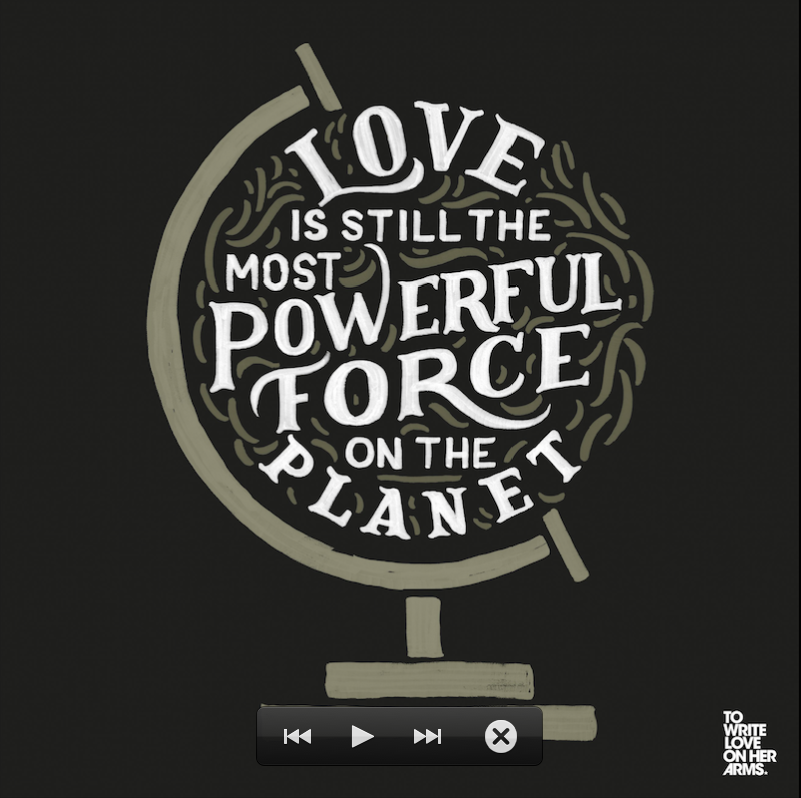
- True Love = well, Love. In my faith understanding, God is love, and God’s love is embodied first in the life, teachings, death, and life again of Jesus, then in us as we reflect Jesus and walk with Spirit every day. Love is the only force which can transform us and our ordinary worlds into agents and places of light.
6. The Completion and Return: The pilgrim returns home to apply newfound meaning in the familiar.
Love’s invitation for us now is the same as it is for every Princess in a fairy tale. According to 1 Corinthians 13: If I speak with the tongues of mankind and of angels, but do not have love, I have become a noisy gong or a clanging cymbal. If I have the gift of prophecy and know all mysteries and all knowledge, and if I have all faith so as to remove mountains, but do not have love, I am nothing. And if I give away all my possessions to charity, and if I surrender my body so that I may glory, but do not have love, it does me no good...faith, hope, and love remain, these three; but the greatest of these is love.4
Fairy tales are not about finding the right person to save us. They are about finding our ultimate power through loving and being loved. We gain wisdom, grow our gifts, slay dragons, compose elixirs, escape prisons, navigate predatory forests, make friends, come back to life, and find our happy ending, all by the power of Love in and for us.
In the end, the message of fairy tales always boils down to one solid point: True Love conquers all. If that’s not the perfect picture of how God loves us and works all things for our good, then nothing is.
Footnotes
- Blakemore, E. (2023, June 8). Fairy tales could be older than you ever imagined. Smithsonian Magazine. https://www.smithsonianmag.com/smart-news/fairy-tales-could-be-older-ever-imagined-180957882/ ↩︎
- “SACRED JOURNEYS WITH BRUCE FEILER | What Is a Pilgrimage?” n.d. SACRED JOURNEYS WITH BRUCE FEILER. https://www.pbs.org/wgbh/sacredjourneys/content/pilgrimage/ ↩︎
- Matthew 3:2 and more, First Nations Version: An Indigenous Translation of the New Testament. Downers Grove, IL.: InterVarsity Press, 2021. ↩︎
- “1 Corinthians 13 (NASB).” n.d. Bible Gateway. https://www.biblegateway.com/passage/?search=1%20Corinthians%2013&version=NASB. ↩︎


 Lucinda S. Sutton
Sometimes, love really is all you need.
LikeLike
Ah, yes, the eternal wisdom of the bards. Thank God for them, too!
LikeLike