


It’s the nerdiest thing I’ve done all summer (always a prestigious achievement), and I could not be happier that I participated. Here in a shamelessly loose application of the Scientific Method is my experience of the Oppenheimer/Barbie: The Movie double feature for your (hopefully) edification and delight:
Step 1: Make an Observation
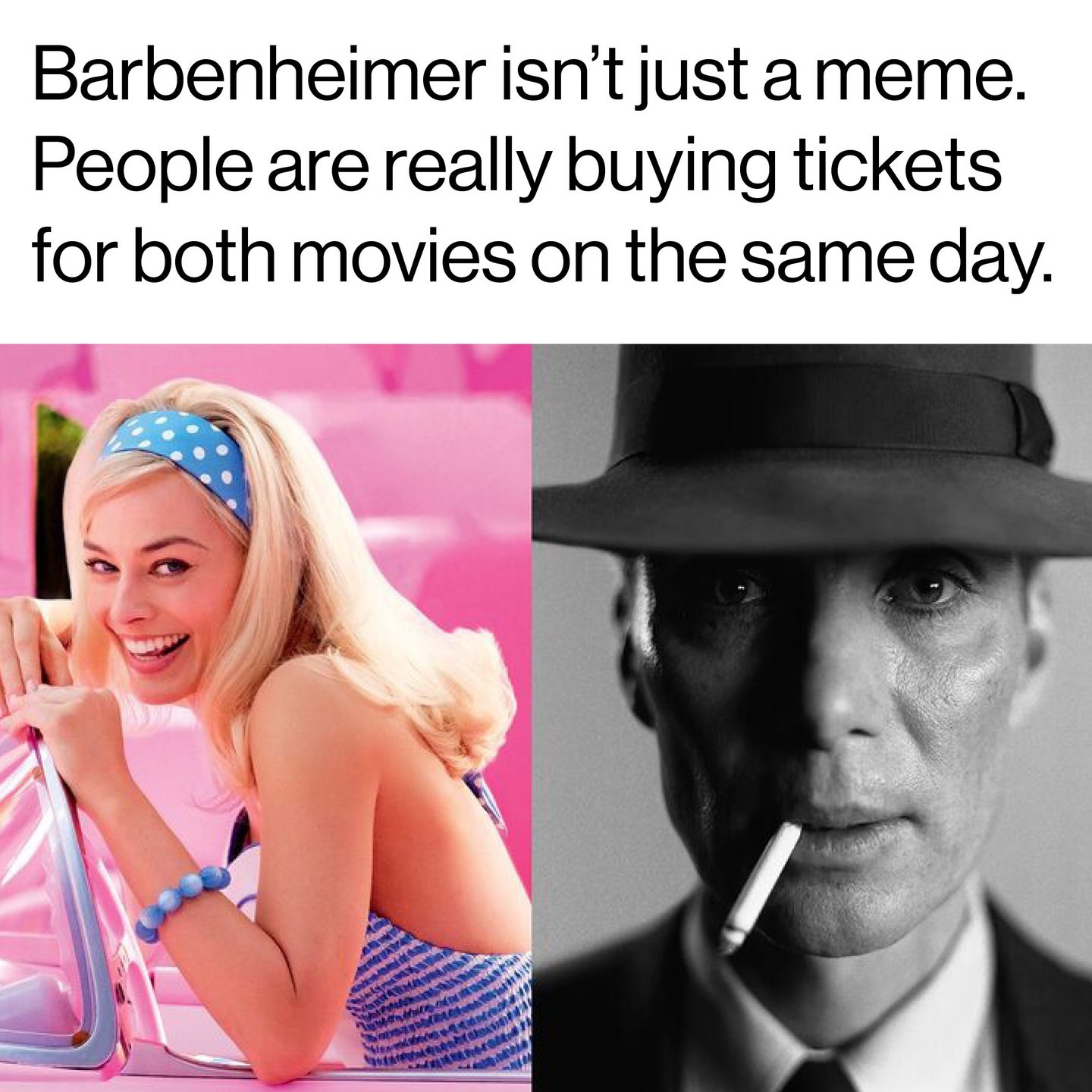
Industry experts thought these two movies would hurt each other in competition; instead, they created a record-breaking “Barbenheimer (or Oppenbarbie) Effect”.
As late as April of this year, reports continued to emerge that Universal would delay Oppenheimer rather than have it go head-to-head against the Warner Bros.’ Barbie on July 21. For whatever reasons, the studio held its ground, and even by very early opening weekend, it was clear that Barbenheimer had morphed into the movie event of the year. The overlap of Greta Gerwig’s bright satire and Christopher Nolan’s three-hour historical opus didn’t pillage ticket sales for either film but instead fueled excitement for both.

Step 2: Ask a Question
What brought these audiences together?
One position is that the very demographics which had worried studios generated the BarbenHeimer phenomenon. The Barbie audience measures at 66.2% female and 74.6% under the age of 29, while the Oppenheimer audience is 70.7% male and 52.9% over 30. Instead of creating competition, the placement and social marketing appear to have inspired many to see a film they may not normally have watched.
I myself had been on the fence about seeing Oppenheimer in theaters (particularly due to the reported underrepresentation of the history regarding indigenous people affected), but creative memes + enthusiastic endorsement of the double feature by the filmmakers themselves inspired me. After all, isn’t the crux of both science and Barbie herself to be and explore everything we can?
Step 3: Propose a Hypothesis
Maybe these two movies (and by extension, their audiences) have more in common than in competition.
If I can be a woman, a science nerd, an artist, a mom, a feminist, a pop culture expert, a fangirl, a Christian, a progressive, a film enthusiast, and more all in one, doesn’t it make sense that others can be complicated amalgams, too? Maybe none of us like being told what we can or will or should like. Maybe we all just want to have fun, be entertained, and/or invest our time and money in something which is meaningful to us.

Step 4: Make Predictions
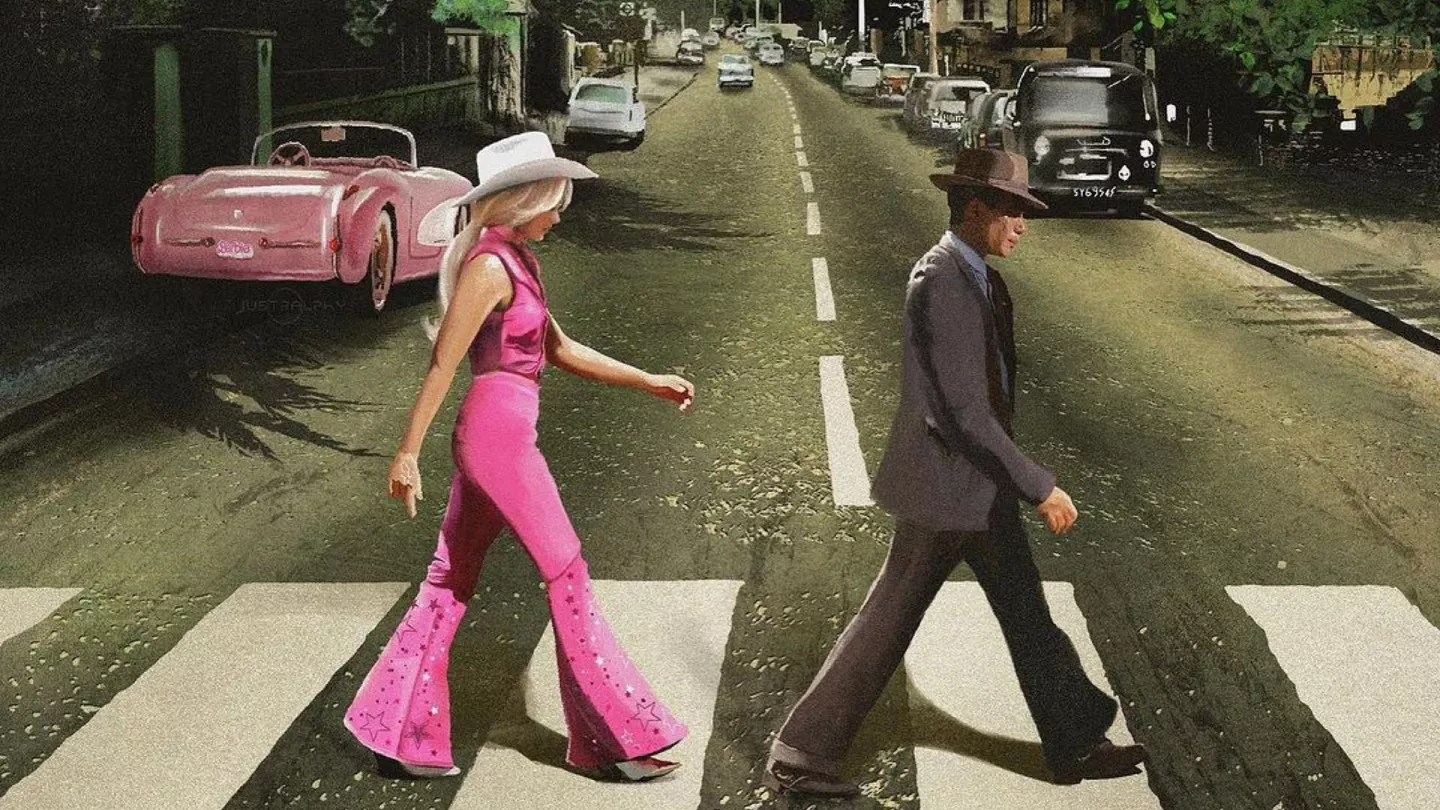
When I do OppenBarbie, I expect to see audiences who have a lot in common with me.
I don’t necessarily expect to see audiences who look exactly like me, but I am predicting a similar spirit of independence and defying expectations. (Note: Are my predictions measurable? Not really, but I said from the beginning it would be loose. Stick with me…)
Step 5: Test the Predictions
I attend a 12PM showing of Oppenheimer by myself, followed by a 4PM showing of Barbie with my friend and two of our daughters at my local small town theater.
I was the first of about 30 people at my Oppenheimer showing on its second weekend. Of those, about half appeared to be senior citizens; the rest seemed to be about my age with the exception of two teenagers possibly on a date. Several of us stepped out for bathroom breaks during the same section of the movie, and we reacted in sync – gasping, holding our breath, remembering to breathe again at many of the same moments. Most of us left before the credits ended (I always try to stay).
At our Barbie showing, the theater was mostly full and much more active. It was too dim to estimate confidently on the distribution of demographics, but I did see people from children through seniors represented, mostly but not exclusively female. Our reactions were all over the place, but everyone seemed to have a good time. Even my friend and I, who hold diametrically opposed views on most of the ideas and characters portrayed, equally got something out of it and even came to tears more than once. Once again, we were some of the few to wait until the end of the credits to leave.
Step 6: Reflect on the Results to Guide Next Steps
(Mild spoilers inevitably follow, though I have done my best to avoid specific plot points.)
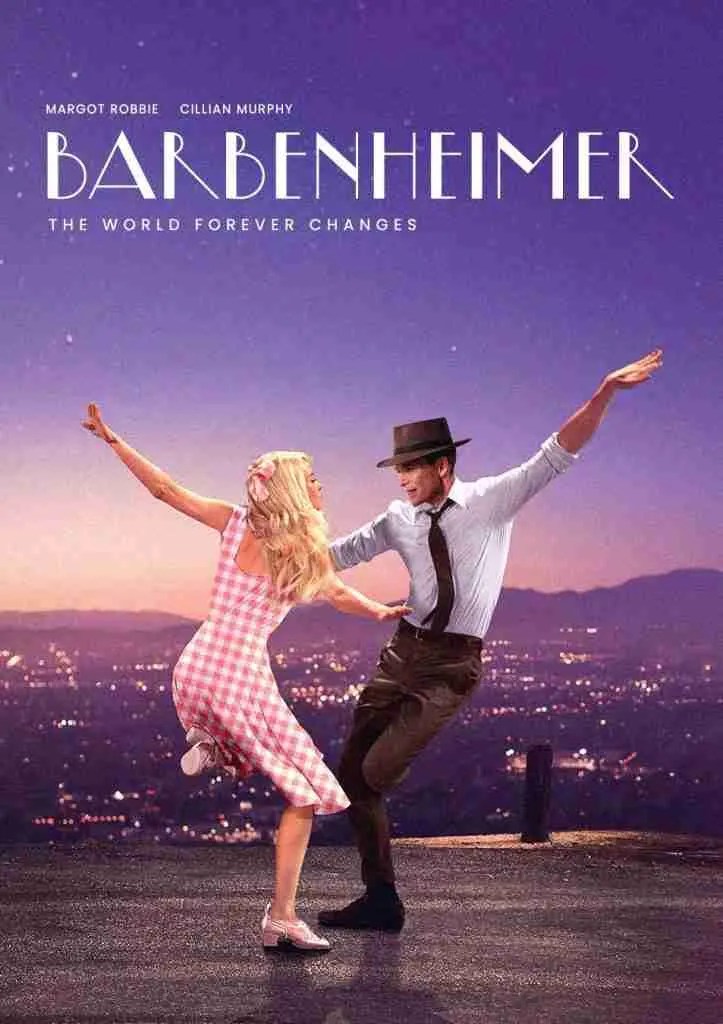
Results: Not measurable, but I did feel that both movies provided more of a communal experience than an isolated or individual one.
How the movies are different:
- Color palette, cinematography, sound editing…almost every technical aspect.
- Representation – While Oppenheimer’s cast is beyond stellar with nary a wasted choice among them, its specific focus on the Manhattan Project team and politicians result in a nearly exclusively white male sea of faces (insert the merits and detriments of historical accuracy here). Barbie’s cast is equally riveting, but for completely different reasons, and is purposely, blatantly, perhaps fantastically diverse in nearly every way.
- Perspective – Oppenheimer reflected the conflict, scruples, and power of humanity. Barbie reflected the conflict, scruples, and power in myself…then in my connections with my neighbors.
How they are similar:
- Perfect and powerful music – Barbie’s soundtrack bops and hypes. The themeless Oppenheimer score ratchets mercilessly, building our anticipation and our dread in equal measure.
- Iconic style – Barbie led me on an emotional journey of fashion nostalgia and envy. Oppenheimer pulled my strings with Cillian Murphy’s literal tip of the ever-so-Breaking Bad porkpie hat (I didn’t know that was a real Robert Oppenheimer thing). I couldn’t look away from either one.
- Patriarchy – The message of both of these stories (Barbie more overtly, but I stand by it for both) is that we do better by giving everyone a place at the table. Oppenheimer makes glancing references to the fact that the lower placement of women regardless of their qualifications inhibited the potential and perspective of science at large. Even more critical, let’s take it a step further by considering the Haudenosaunee (a federation of Mohawk, Seneca, Cayuga, Onondaga, and Oneida tribes): Their matrons had the power to help select chiefs, to participate in councils, and to wage war; how might The Manhattan Project and World War 2 – or any of our wars – have been different with more women also at the helm?
Barbie, of course, places the patriarchy front and center of the narrative, but – and herein lies the greatest surprise of the whole experience for me – it asserts that matriarchy is also a bad idea. In the truest representation of the definition of feminism, the message above all is that happiness, healthy identity, and the best of society manifest through equal value of every person. Any imbalance of the scales of power is an affront to each other, to our Creator, and to ourselves.
Next steps: I am inspired (and I hope all viewers will be) to require, generate, and hopefully live out stories based more on what unites us than what divides. Here’s to more accidental “double features” like this one!


You make a good case for seeing both in the same day. I’m not sure that I have the stamina, but who knows?
LikeLike