

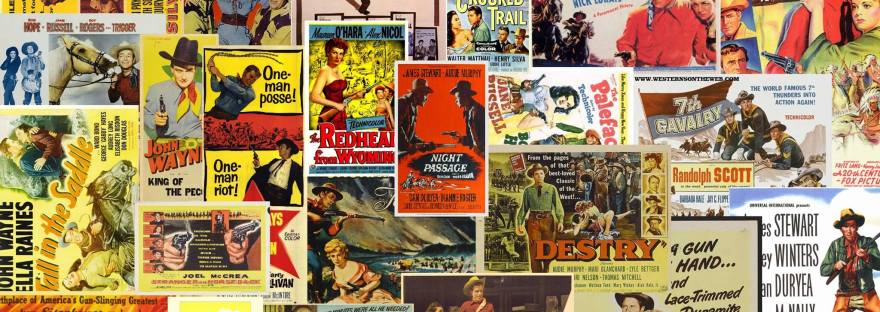
A pilgrimage is a journey to a sacred place; I call myself a Pop Culture Pilgrim because, as I walk Creator’s good road1, the stories in books, movies, TV, music, games, and all the rest illuminate for me God’s greater Story. My favorite stories tend to be of the superhero and horror genres, but a few years ago, much to my surprise, my path took a turn through the valley of the Western. Westerns had their heyday in the entertainment industry from the 1930s—60s, but by the 80s had fallen out of favor almost completely. Today, they are having somewhat of a surprising resurgence, and I found myself curious as to why. Following the six stages which tend characterize any pilgrimage2, I offer you this snapshot of my personal path to connect with the voice of Spirit and Story for a better look at what westerns have to say:
1. The Call: A feeling or vague yearning to find meaning; for our purposes, to find overarching relevance within a narrative.
I never particularly cared for westerns, honestly. My exposure to them as a kid through my mother’s regular intake of Bonanza and Gunsmoke and Maverick and the like, gave the appearance to me of all repeating the same plot (and not a particularly good one), with only slight variations in the faces atop the horses. They bored me.
Ah, but then came Tombstone. I cannot count how many times I have watched that movie, and I still throw it on about once a year for background noise or movie nights. Later, I discovered Justified and went down an Elmore Leonard (fire-in-the) rabbit hole for about six months. Finally, when I stumbled upon Firefly and was left so desperately wanting more, I had to admit there was something resonating within me about this narrative that deserved exploration.

2. The Separation: Sameness is the enemy of spirituality; pilgrimage, by its very nature, undoes the safe and familiar.
In order to understand, I did a deep dive for about two months during which I eschewed my regular Watch Lists and TBR stack in order to absorb nothing but westerns of various eras. To that end, I took in Clint Eastwood’s Dollars Trilogy, Shane, The Outlaw Josey Wales, The Power of the Dog, Stagecoach, Unforgiven, The Harder They Fall, and many more. I also binged Yellowstone and re-read The Gunslinger and some of my Elmore Leonard stories. I even watched (and loved) the original, 203-minute-long Seven Samurai, widely recognized basis for The Magnificent Seven and several other movies of the genre. Taking on this project by means of full immersion was my very own new frontier, in a way, replete with vistas and valleys, perspectives and pitfalls, and…
3. The Journey: The backbone of a sacred journey is the pain of the journey itself.
…yes, it also held more than its fair share of cringe and pain. Westerns reflect a number of America’s myths about ourselves and our origins—many of them historically inaccurate, racist, exclusive, misogynistic (I swear, horses are better represented than women), or all of the above. The classic Western centers around a cowboy-hero taking matters into his own hands to save society (by which he always means the vulnerable white settlers). As films grew more sophisticated, revisionist westerns challenged the classic notions of black hat v.s white hat/good vs. evil—a perspective which gained some honesty, but inadvertently undermined the credibility of the genre as a whole. Then neo-westerns tried to bring it back by keeping the setting and themes while removing some of the problematic elements from before, with only limited success. The legacy of classic westerns looms over us still, and as Kristin Kobes DuMez’s Jesus and John Wayne so thoroughly details, the archetypes they represent persist today in unhealthy role models for leaders and misappropriated nostalgia for bygone eras.

4. The Contemplation: The traveler may be led along an indirect route to the sacred place, circling the outside on a path of observation and reflection.
Understanding the spiritual resonance of any group of stories begins with noting what they have in common. Westerns all tend to feature the iconic elements of cowboys, gunslingers, saloons, homesteads and/or livelihoods in peril, showdowns, and a vast, rugged landscape. They use these elements to explore themes of morality, justice, revenge, and the struggle for survival in a harsh and unfamiliar environment. From an individualist standpoint, they can offer a superficial kind of inspiration; the hero is seen by himself and others as a lone voice of virtue against insensate resistance, and in a few cases, that may hold up. Most of the time, however, the true enemy is not the people or the land around him, but the failure of the system and the law.
The invisible character pulling the strings behind the classic western narrative is the force of Empire which set the hero up for trouble before he ever arrived on the scene. His conflict “against” the Natives was the direct result of centuries of bait-and-switch treaties, repeated betrayal, war crimes, and outright genocide committed by the American government, despite most tribes attempting repeatedly to live at peace with the settlers3. The struggle to cultivate homesteads and transform the predominantly arid West into an agricultural garden and a home for multiplying millions of residents actively worked against the land’s nature and would later result in tremendous environmental blowback4. Manifest Destiny and Frederick Jackson Turner’s “frontier thesis,” which glorified westward expansion as the white man’s strength and spiritual birthright, perpetuated a presumed dominance over all others which continues to ricochet in societal violence today5. The gaze of the cowboy and all heroes of his ilk was directed against created enemies to serve the purposes of gain for distant powers higher up. Thus, their stories have become cautionary tales in a myriad of unintended ways.
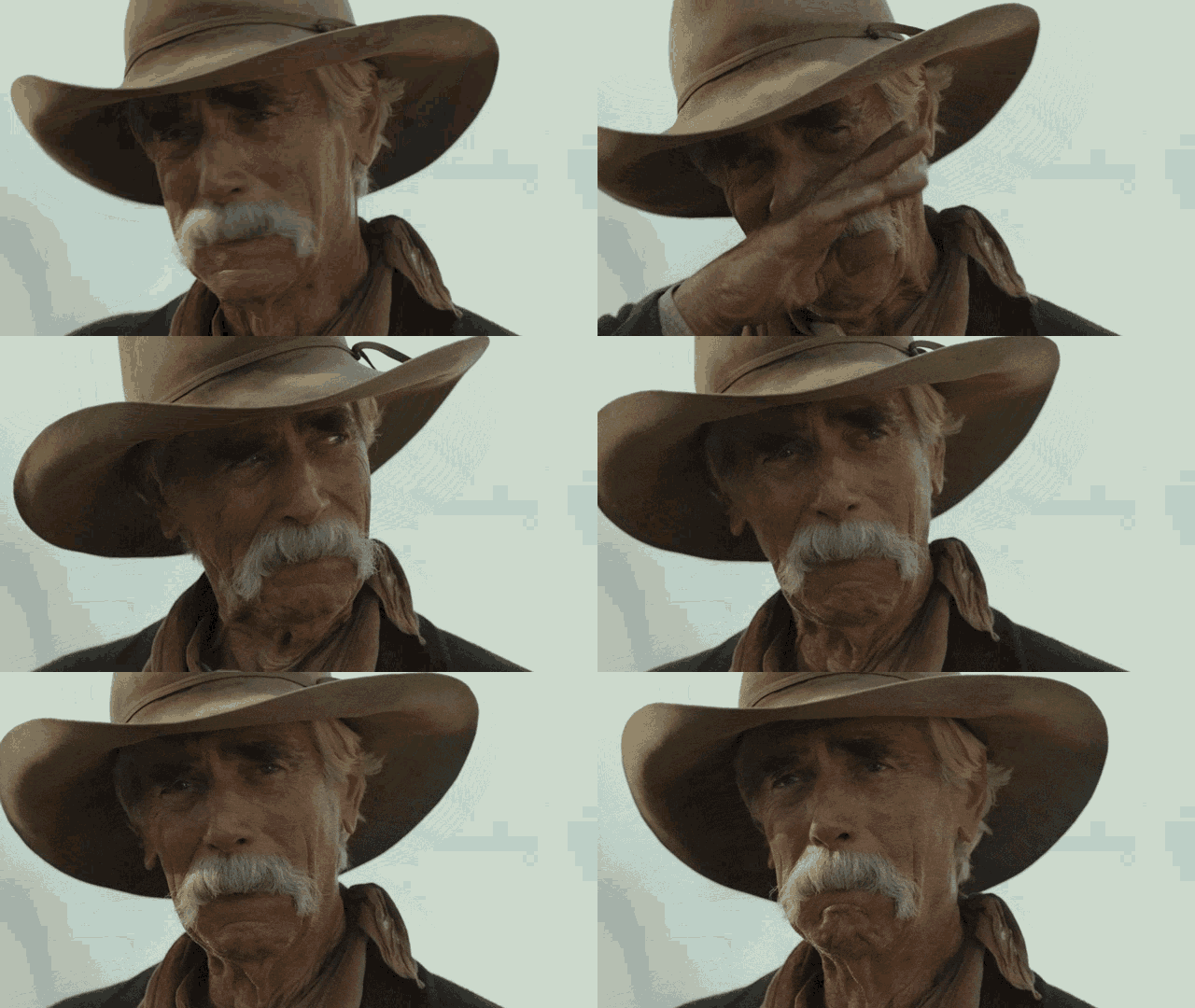
5. The Encounter: The climax of the journey, when the traveler slides through the thin membrane in the universe and connects with Creator.
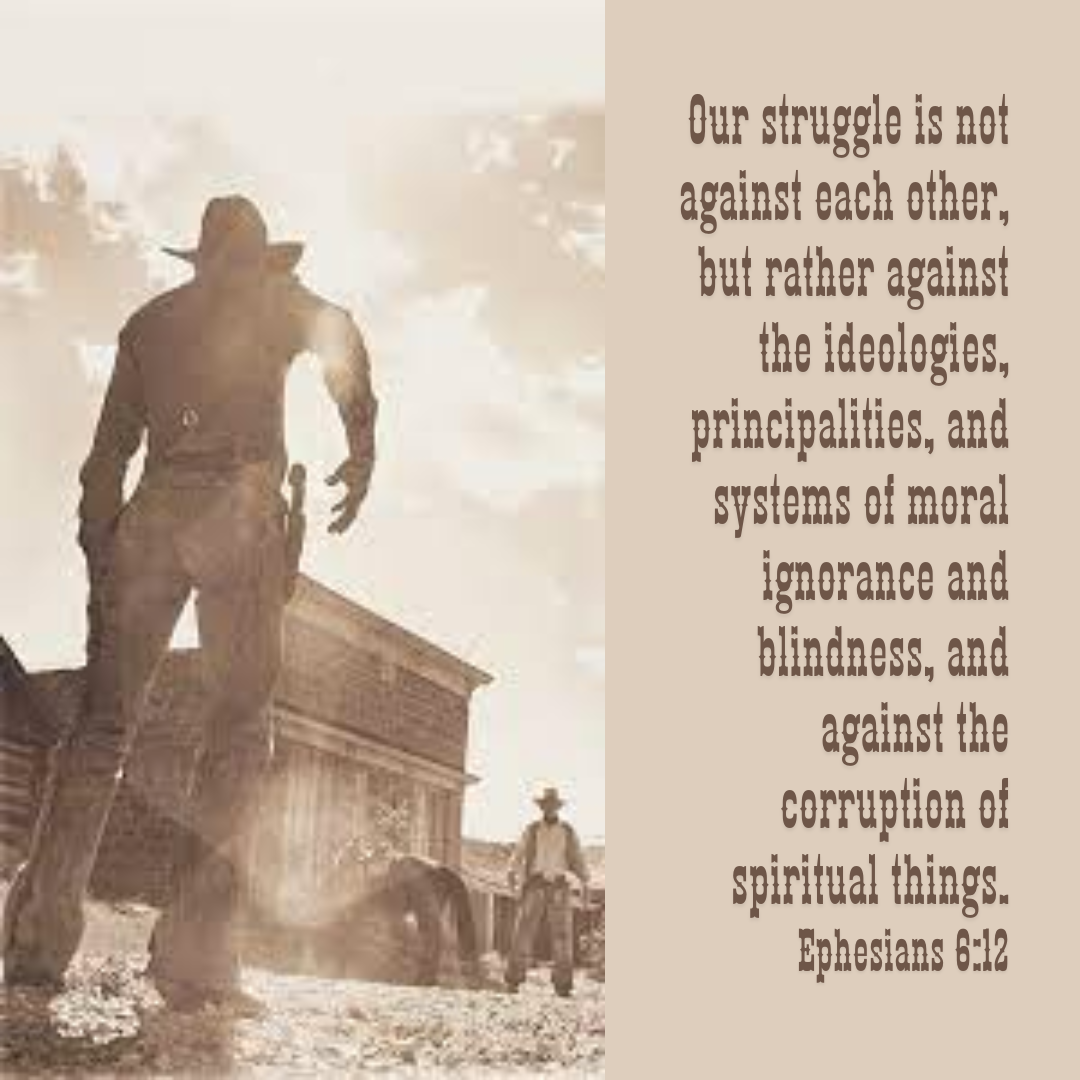
Our struggle is not against each other, but rather against the ideologies, principalities, and systems of moral ignorance and blindness, and against the corruption of spiritual things (Ephesians 6:12, paraphrase mine).
Anti-imperialism is a major yet often overlooked theme in scripture. The biblical narrative details many empires, all of whom have a devastating effect on the people of God and creation as a whole. Pharaoh’s Egypt, Babylon, Medo-Persia, and Rome were all empires against which God’s people in the Bible were called to live. Moses, Esther, Daniel, and Jesus all suffered at the hands of imperial regimes and ultimately overcame them as models of God’s love and desire for all people to be free. The repeated failure of God’s people was themselves falling into the idolatrous patterns of Empire and corruption; in response, prophets and apostles were sent to remind them (and were persecuted for it) that God’s design is for an economy centered around love for neighbor and provision for the needy (Deuteronomy 24, Jeremiah 22, Acts 6), appropriate care of creation and its produce (Leviticus 25, Haggai 1, Luke 12), multicultural community (Isaiah 56 and 61, Acts 11), and justice (Jeremiah 7, Ezekiel 18, James 2)6. Classic westerns, while often intended as an expression of human grit at its finest, end up encapsulating everything that can go wrong when we try to operate outside of this design.
6. The Completion and Return: The pilgrim returns home to apply newfound meaning in the familiar.
Spirit’s call on us now is the same as it was on the people of the Bible then:
Though we walk in the flesh, we do not wage battle according to the flesh, for the weapons of our warfare are not of the flesh, but are divinely powerful for the dismantling of arguments and all arrogance raised against the knowledge of God (2 Corinthians 10:3-4)
and
Do not be conformed to this world, but be transformed by the renewing of your mind so that you may prove what the will of God is, that which is good and acceptable and perfect (Romans 12:2).
We are not called to be cowboys out in the wilderness fighting for our individualistic interests as part of someone else’s war. We are more like the Fellowship of the Ring, representatives of many cultures coming together to defeat a corrosive evil that imperils us all.
But that’s another story…
Footnotes
- Matthew 3:2 and more, First Nations Version: An Indigenous Translation of the New Testament. Downers Grove, IL.: InterVarsity Press, 2021. ↩︎
- Feiler, Bruce. What Is a Pilgrimage? 2014. PBS. ↩︎
- Brown, Dee. Bury My Heart at Wounded Knee : an Indian History of the American West. New York: Holt, Rinehart & Winston, 1970. ↩︎
- Limerick, Patricia Nelson. The Legacy of Conquest : the Unbroken Past of the American West. New York: Norton, 1987. and White, Richard. “It’s Your Misfortune and None of My Own”: A History of the American West. Norman, University of Oklahoma Press, 1991. ↩︎
- Aron, Stephen. The History of the American West Gets a Much-Needed Rewrite. Smithsonian Magazine, 2016 ↩︎
- Brueggemann, Walter. Jesus Acted Out the Alternative to Empire. 2018. Sojourners. ↩︎


 Lucinda S. Sutton
1 thought on “The Pilgrim’s Way: Westerns”